

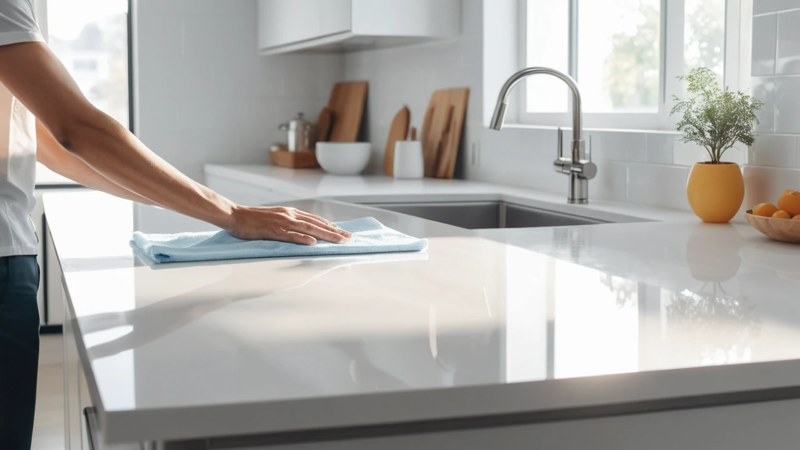
How to polish quartz countertops quickly and safely. Learn simple steps, tools, and tips to restore shine and remove dull spots at home.
Quartz countertops can be polished by cleaning the surface, using a non-abrasive polish or mild cleaner, buffing gently with a microfiber cloth, and sealing scratches carefully. Regular care keeps them shiny and smooth without damaging the finish.
How To Polish Quartz Countertops ✨
Ever looked at your quartz countertop and thought, “Why does it look dull now?” 🤔
You’re not alone. Even though quartz is tough and stylish, it can lose its shine over time. The good news? You don’t need expensive tools or a professional to fix it.
Let’s walk through exactly how to polish quartz countertops and bring back that fresh, glossy look—step by step.
What Makes Quartz Countertops Unique 🧱
Quartz countertops are engineered surfaces made from natural quartz crystals mixed with resin. This combination makes them strong and non-porous. Unlike granite, quartz doesn’t need sealing, which makes maintenance easier.
Because of the resin, quartz has a smooth and glossy finish. But that same resin also means it can get dull if not cleaned properly. Harsh chemicals or rough scrubbing can damage the shine over time.
So, understanding the material is the first step. When you know what you’re working with, you avoid mistakes and keep your countertop looking brand new for years.
Why Quartz Countertops Lose Their Shine 😕
Over time, even the best countertops can lose their sparkle. This usually happens due to buildup or improper cleaning methods.
Here are some common reasons:
- Soap residue buildup
- Hard water stains
- Grease and food spills
- Using harsh cleaners or bleach
- Scratches from rough scrubbing
These factors create a thin film on the surface. That film blocks light reflection, making your countertop look dull.
The good news? Most of these issues are easy to fix with simple polishing methods.
Essential Tools You’ll Need 🧰
Before you start polishing, gather the right tools. Using proper materials prevents damage and gives better results.
Here’s what you need:
- Microfiber cloths
- Mild dish soap
- Warm water
- Quartz-safe polish
- Spray bottle
- Soft sponge
Avoid anything abrasive like steel wool or rough pads. These can scratch the surface and make things worse.
Cleaning Before Polishing Is Key 🧼
You should never polish a dirty surface. Cleaning removes buildup so polishing can work effectively.
Start by mixing warm water with a few drops of dish soap. Dip a soft cloth into the solution and wipe the surface gently. Focus on areas with visible stains or grease.
Rinse with clean water and dry with a microfiber cloth. This step alone can already improve the shine. Sometimes, what looks dull is just a layer of residue.
Best Cleaners For Quartz Surfaces 🧴
Not all cleaners are safe for quartz. Choosing the right one makes a big difference.
Here’s a quick guide:
| Cleaner Type | Safe For Quartz | Notes |
| Mild Dish Soap | Yes | Best for daily cleaning |
| Glass Cleaner | Yes (occasion) | Adds quick shine |
| Bleach | No | Can damage resin |
| Vinegar | Limited use | Use diluted only |
| Abrasive Cleaners | No | Causes scratches |
Stick to gentle cleaners. Less is more when it comes to quartz care.
Step-By-Step Guide To Polish Quartz Countertops 🛠️
Now let’s get into the actual polishing process.
Follow these simple steps:
- Clean the surface thoroughly
- Spray quartz-safe polish evenly
- Use a microfiber cloth to buff
- Apply gentle circular motions
- Wipe off excess product
- Dry with a clean cloth
Take your time while buffing. Rushing can leave streaks or uneven shine.
How To Remove Dull Spots Effectively 🌟
Dull spots often appear in high-use areas like near sinks or cooking zones. These spots usually come from residue buildup.
To fix them:
- Apply a small amount of polish directly
- Let it sit for 2–3 minutes
- Buff gently with a soft cloth
Repeat if needed, but don’t overdo it. Too much polishing can create uneven shine.
Consistency matters more than force.
Dealing With Stubborn Stains 🧽
Some stains need extra attention. Think coffee, wine, or oil spills.
Use a baking soda paste mixed with water. Apply it gently on the stain and let it sit briefly. Then wipe it off with a damp cloth.
Never scrub hard. Quartz is durable but not scratch-proof.
Common Mistakes To Avoid ❌
Many people damage their countertops without realizing it.
Avoid these mistakes:
- Using bleach or strong chemicals
- Scrubbing with rough pads
- Ignoring spills for too long
- Using heat directly on the surface
These habits can reduce shine and shorten the lifespan of your countertop.
How Often Should You Polish Quartz? 📅
You don’t need to polish quartz daily. In fact, over-polishing can do more harm than good.
Here’s a simple routine:
| Task | Frequency |
| Daily Cleaning | Every day |
| Deep Cleaning | Once a week |
| Polishing | Once a month |
This routine keeps your countertop shiny without damaging it.
DIY Vs Commercial Quartz Polish 🆚
You can use both DIY and store-bought solutions. Each has its benefits.
DIY options like mild soap are cheap and safe. Commercial polish products give a stronger shine and faster results.
Choose based on your needs. For regular care, DIY works fine. For restoring shine, a quartz polish is better.
Tips To Maintain Long-Lasting Shine 💡
Keeping your quartz shiny is easier than restoring it.
Follow these tips:
- Wipe spills immediately
- Use cutting boards
- Avoid dragging heavy objects
- Clean daily with mild soap
Small habits make a big difference over time.
Can You Use Vinegar On Quartz? 🤨
This is a common question. Vinegar is acidic, so it should be used carefully.
Diluted vinegar can help remove hard water stains. But frequent use can damage the resin surface.
Use it only occasionally and always rinse thoroughly.
Signs Your Quartz Needs Polishing 🔍
Not sure if it’s time to polish?
Look for these signs:
- Dull or cloudy surface
- Visible streaks
- Uneven shine
- Sticky or greasy feel
If you notice these, it’s time for a polish session.
Professional Polishing: When Is It Needed? 🏠
Sometimes DIY isn’t enough. Deep scratches or severe dullness may need professional help.
Professionals use special tools and compounds. They can restore the surface safely without causing damage.
Consider this option if your countertop looks heavily worn.
Quick Comparison Of Cleaning Vs Polishing 📊
| Feature | Cleaning | Polishing |
| Purpose | Remove dirt | Restore shine |
| Frequency | Daily | Monthly |
| Tools Needed | Soap, cloth | Polish, microfiber |
| Result | Clean surface | Glossy finish |
Both steps are important. Cleaning prepares the surface, while polishing enhances it.
Final Thoughts On Quartz Care ✨
Polishing quartz countertops isn’t complicated. With the right tools and simple steps, you can restore shine easily at home.
Focus on gentle cleaning, avoid harsh chemicals, and polish occasionally. These small actions keep your countertop looking beautiful for years.
Remember, consistency beats effort. A little care every day saves you from big fixes later.
FAQs
How To Polish Quartz Countertops At Home Naturally?
Use mild dish soap and warm water for cleaning. Then buff with a microfiber cloth. For extra shine, use a quartz-safe polish occasionally.
What Is The Best Way To Restore Quartz Shine Quickly?
Clean the surface first, then apply a quartz polish. Buff gently in circular motions. This restores shine within minutes.
Can I Use Baking Soda On Quartz Countertops?
Yes, but only for tough stains. Use it as a paste and apply gently. Avoid scrubbing to prevent scratches.
How Do I Remove Cloudiness From Quartz Surfaces?
Cloudiness usually comes from residue buildup. Clean with mild soap and rinse well. Then polish lightly to restore clarity.
How Often Should Quartz Countertops Be Polished?
Polish once a month for best results. Daily cleaning is more important. Avoid over-polishing to protect the surface.